7 Reasons Players Are Ditching $200 SOCD Keyboards
Snap tap sold a lot of hall-effect keyboards. Then players did the math on what the feature actually is (an input-resolution rule) and started getting it a different way. Here's why.
 Download Rebind freeSOCD on the keyboard you already own. Five minutes. Windows, macOS, Linux.
→
Download Rebind freeSOCD on the keyboard you already own. Five minutes. Windows, macOS, Linux.
→
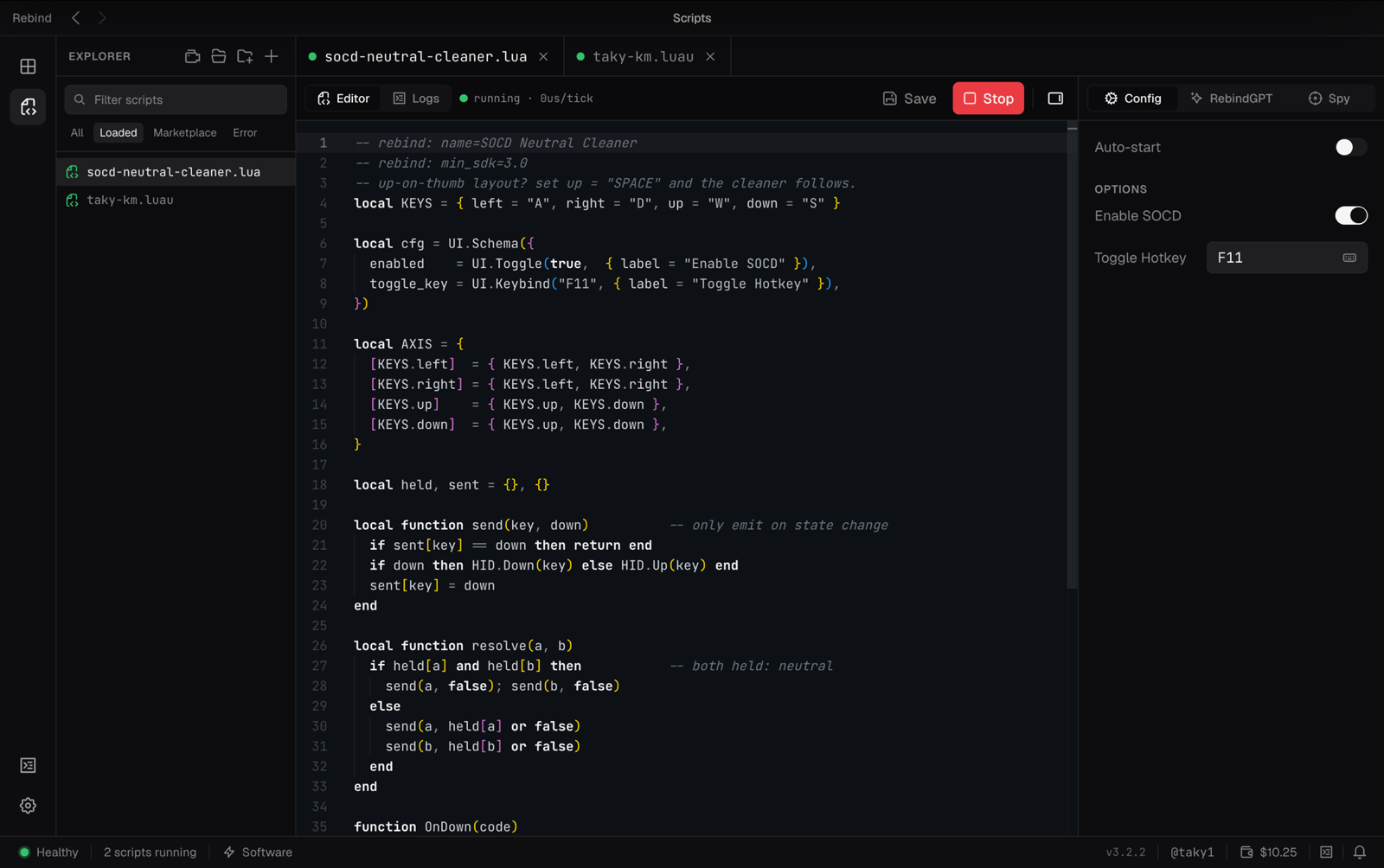
1. The feature is 45 lines of code, not $200 of hardware
Opposing-key resolution is a rule: when both directions are held, decide which one the game sees. That's a small script, not a switch technology. Rebind ships it as ~45 lines of Lua you can read: the whole script is here.
2. Their keyboard, or the one you actually like
Buying a Wooting or a Huntsman for SOCD means the feature lives in their board. Your full-size layout, your custom build, the switches you've already tuned: none of it comes along. Software-side resolution works on whatever is plugged in.
3. Every mode, not the menu you're given
Keyboard firmware gives you the modes the vendor shipped. A script gives you neutral for fighting games, last-input where it's legal, per-key exceptions, whatever your game needs, because you can edit it.
Try it on your keyboard tonightFree download, paste the script, done.
→
4. Rules change faster than firmware
Valve banned snap-tap-style resolution from CS2 matchmaking; Valorant explicitly allows it; fighting-game majors require the neutral variant. A hotkey toggle handles that reality better than a firmware setting buried in vendor software. The full rules map is here.
5. One platform, every input trick
The $200 board does SOCD. The same Rebind script engine also does remaps, layers, app-specific profiles, and mouse scripts. With Rebind Link attached, a 4-line script inverts your mouse at up to an 8,000 Hz report rate. One tool, not one feature.
6. Free beats $175 to $200
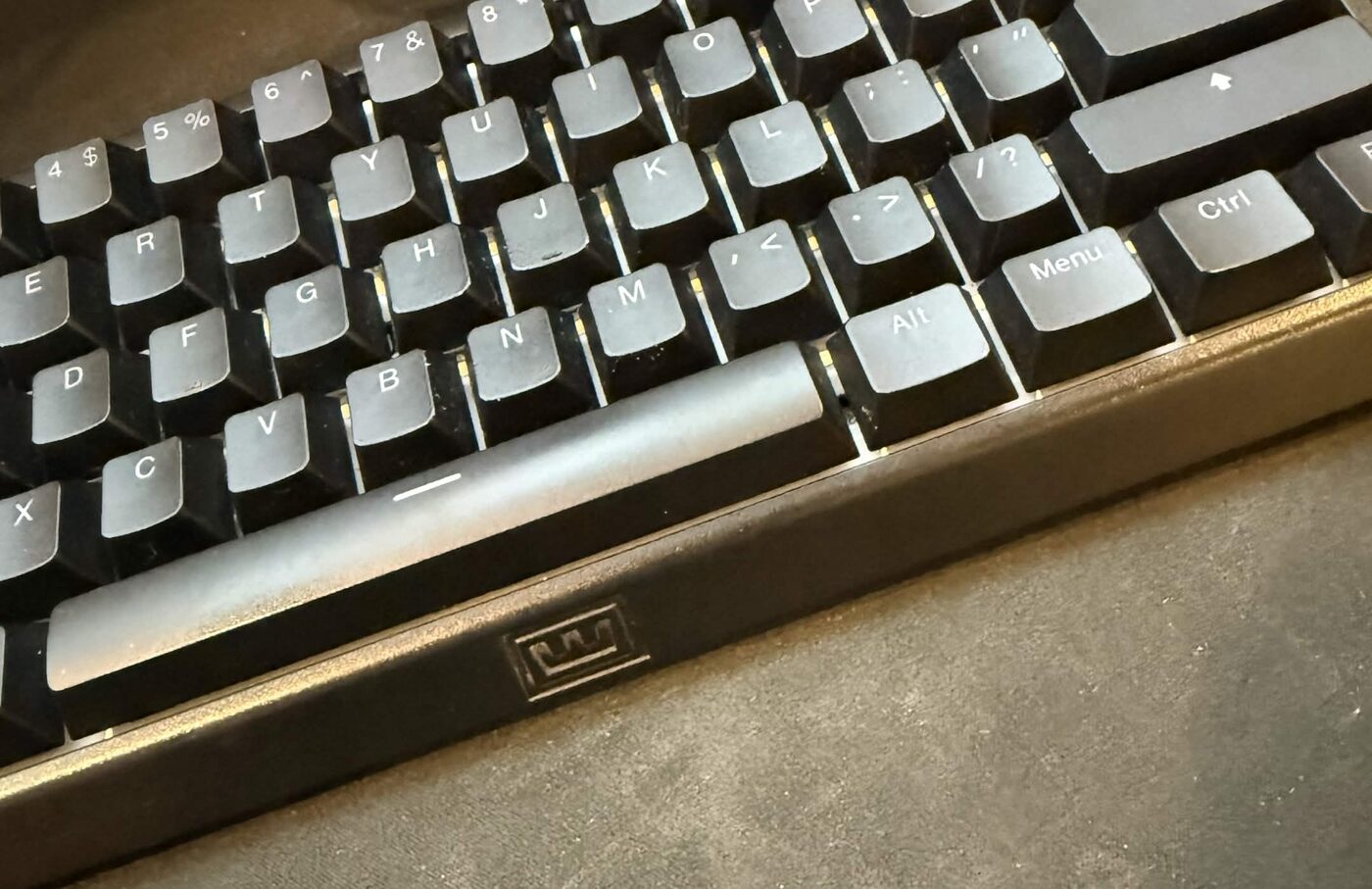
The boards are genuinely good. But if SOCD is why you're buying, you're paying $175 to $200 for a rule you can run tonight for nothing. Spend the money on switches you love instead.
7. You can read what's resolving your inputs
Firmware is a black box. A Lua script is right there in the editor: what it intercepts, what it sends, what it never touches. For anyone who cares what sits between their hands and the game, that transparency is the feature.
Download Rebind freeKeep your keyboard. Get the feature. Windows, macOS, Linux.
→
Rules note: use the mode the game you're queuing allows: neutral for brackets, off for CS2 matchmaking. That's what the toggle is for.